
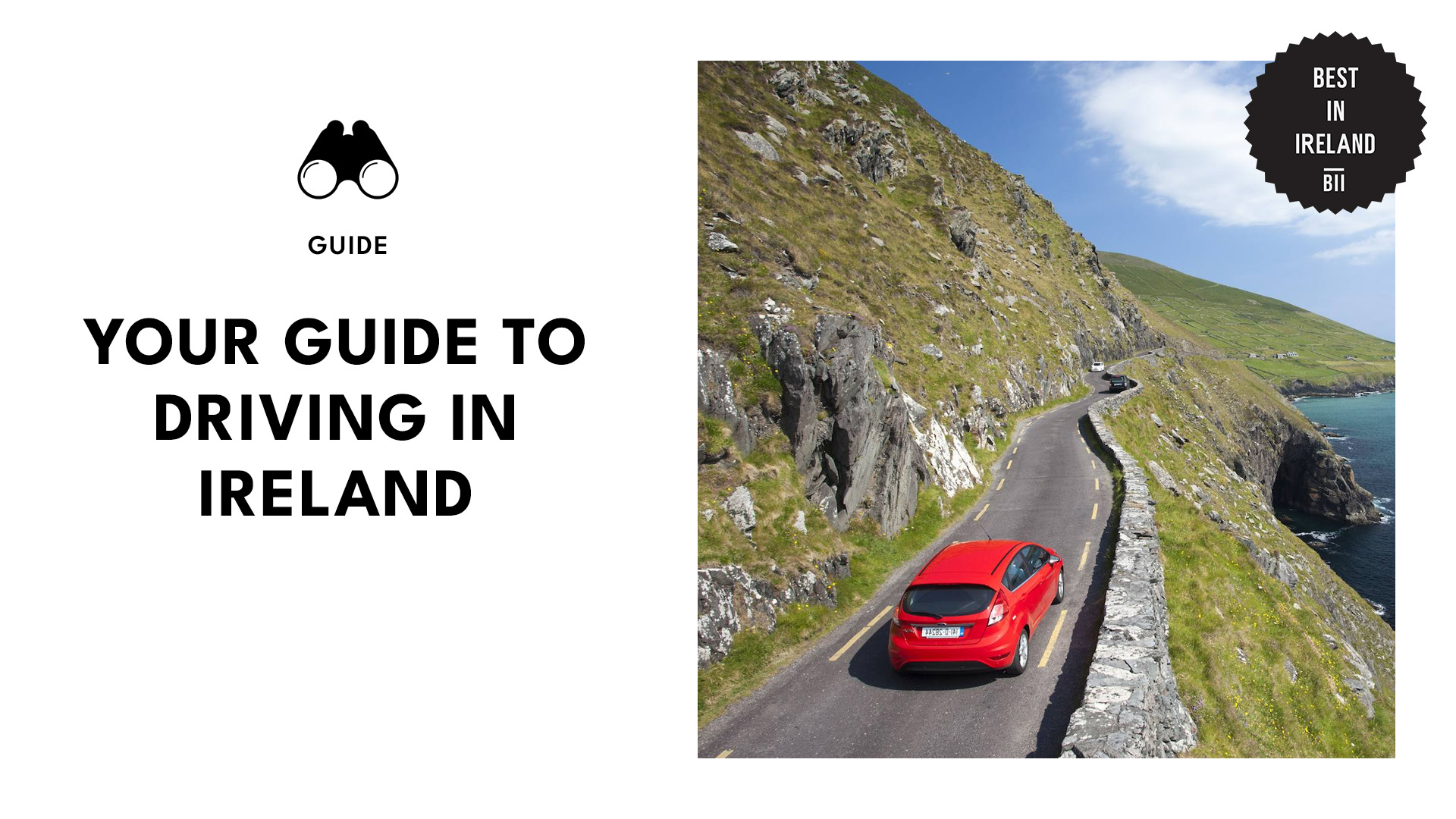
We went from the coast to the countryside, to write up this extra awesome guide to driving in Ireland!

First time driving in Ireland? Well, buckle up for a wild ride through the Emerald Isle, where driving is less about getting from point A to point B and more about embracing the unpredictable charm of Irish roads.
Driving in Ireland is an adventure that will test your skills, challenge your patience, and reward you with landscapes so stunning you’ll want to stop every five minutes.
In this article, we give you all you need to know about preparing for your exciting drive!
Preparing Your Driver’s Licenses and Permits
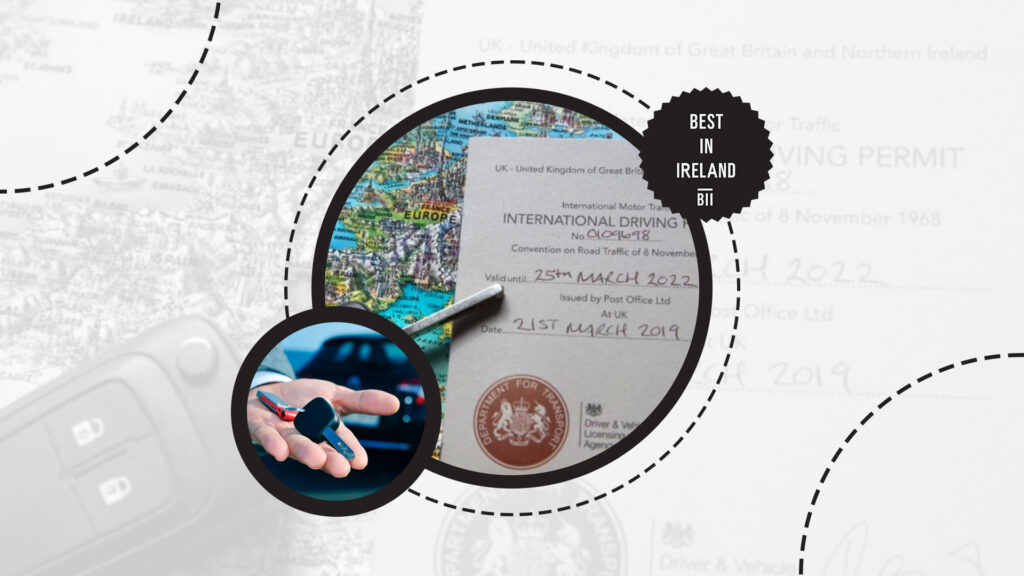
Visitors from most countries can use their home country’s driver’s license for up to 12 months, but there are important considerations.
While not always mandatory, an International Driving Permit (IDP) is recommended, especially if your license is not in English.
For European Union citizens, your standard driving license is sufficient. Non-EU travelers typically need a valid driver’s license from their home country that has been held for at least one year.
Some car rental companies may require an IDP, and it provides an official translation of your driving credentials, making interactions with local authorities smoother.
Study and Understand Irish Road Rules
Seatbelts
Using seatbelts is mandatory for all vehicle passengers. Drivers are responsible for ensuring passengers under 17 are properly restrained, while children under 150 cm tall or weighing less than 36 kg must use appropriate child restraints.
Front and rear seat belt use is compulsory, with significant on-the-spot fines for non-compliance of up to €120. Additionally, rental companies typically offer child seat rental and they must meet EU safety standards.
Driving on the Left Side of the Road
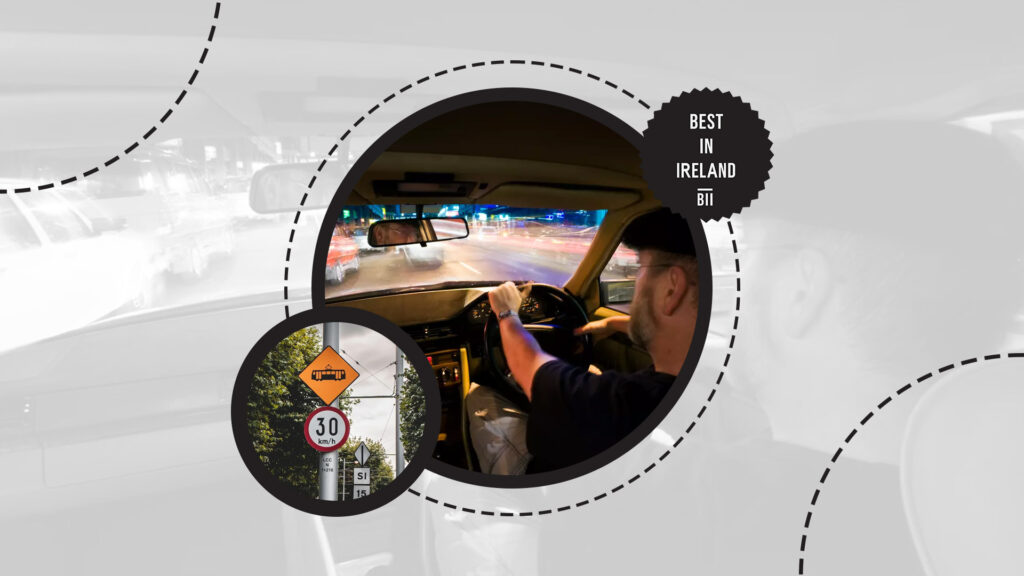
Remember that we drive on the left side in Ireland, which means the driver sits on the right side of the vehicle and uses the left lane as the primary driving lane.
If you’re not used to it, the most basic and important thing when practicing right-hand drive is to always look right first.
We suggest getting a car with an automatic transmission if it’s available at the rental company, as it would be easier to adapt to right-hand drive.
Roundabouts are extremely common in Ireland and require careful navigation. Always enter the roundabout moving to the left and yield to traffic already in the circle.
Use your turn signals to show your intended exit. For multi-lane roundabouts, choose your lane based on your exit – left lane for first and second exits, right lane for later exits.
Just remember to take your time, watch for signages, and be prepared for sudden stops.
Speed Limits and Road Signs
Irish speed limits are typically displayed in kilometers per hour (km/h). The standard limits are 50 km/h in urban areas, 80 km/h on rural roads, 100 km/h on national roads, and 120 km/h on motorways.
Speed limit signs are circular with white backgrounds and red borders. Look out for distinctive Irish road signs, which use both English and Irish Gaelic languages.
Pay attention to variable speed limits, especially in construction zones or near schools. Also take note that speed cameras and mobile speed checks are common, with strict enforcement.
Unique Traffic Regulations
Ireland has several unique traffic regulations that may surprise international drivers.
Here are some of the most important rules to remember:
- Yielding to the right is a key principle at many intersections.
- Headlights must be used during twilight and poor visibility conditions.
- It’s illegal to use a mobile phone while driving, even with a hands-free system.
- Drinking and driving laws are strict, with a low legal blood alcohol limit of 0.5 mg per ml (0.05%).
- Priority is given to vehicles coming from the right at many intersections, especially in rural areas.
- Warning triangles are recommended and reflective vests are mandatory to carry in your vehicle for emergencies when driving in motorways.
Road Types and Driving Conditions
Motorways
Irish motorways are equivalent to interstate highways, providing the fastest and most direct routes between major destinations. These are typically marked with an ‘M’ designation like M1 or M50.
With multiple lanes, clear signage, and minimal intersections, motorways allow speeds up to 120 km/h.
Most motorways radiate from Dublin, connecting key urban centers like Cork, Limerick, and Galway. Toll sections exist on some motorways, particularly around Dublin, so be prepared to pay electronic or cash tolls.
National Primary and Secondary Roads
National primary roads (marked with ‘N’ like N4 or N7) connect major cities and regions.
These roads are generally wider and better maintained than rural routes but narrower than motorways. Speed limits typically range from 80 to 100 km/h.
Secondary national roads (also ‘N’ designated) are slightly less developed but still crucial for regional connectivity. These roads offer more scenic routes, passing through smaller towns and providing a more intimate view of Irish landscapes.
Rural and Country Roads
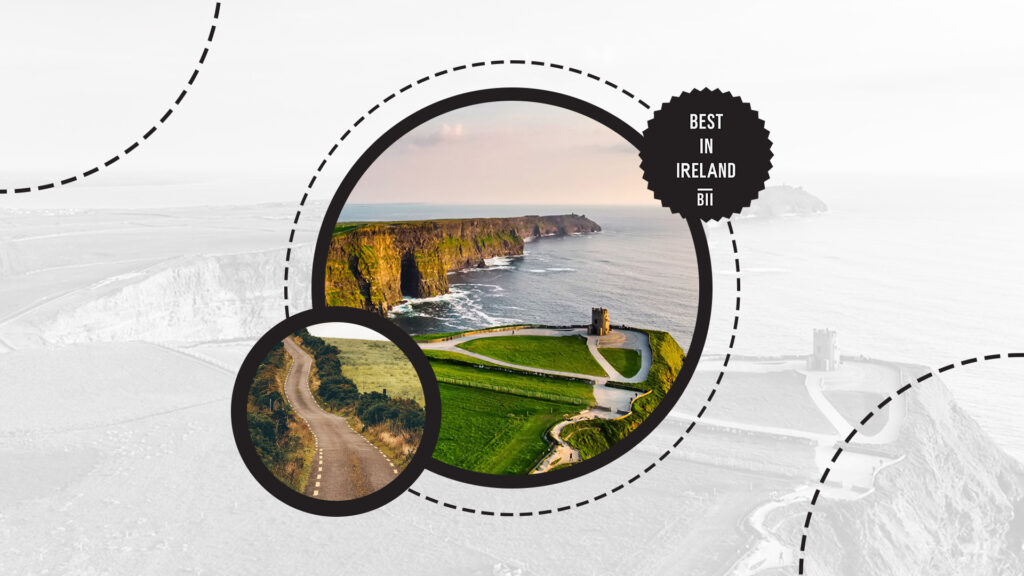
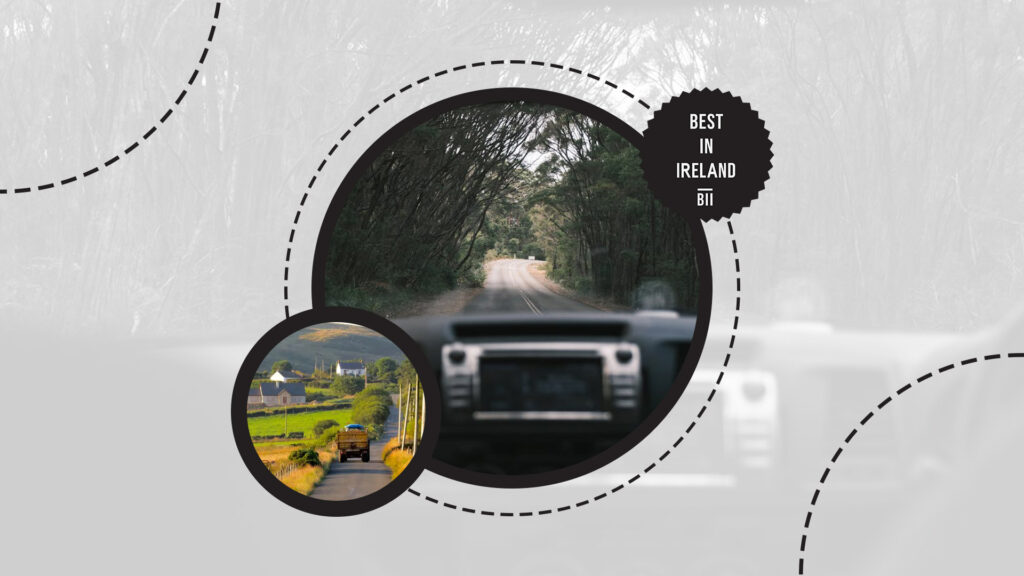
Rural and country roads represent the quintessential Irish driving experience. These narrow, winding roads often traverse stunning landscapes, offering breathtaking views of green countryside, stone walls, and traditional Irish farmland.
Typically single-lane with limited passing opportunities, these roads demand careful navigation and patience. Speed limits are lower, usually around 80 km/h, but practical speeds are often much slower due to road conditions
Many rural roads lack shoulder space and have blind corners, requiring heightened awareness. GPS navigation can be less reliable in these areas, so a physical map, paying attention to road signs, and local knowledge are invaluable.
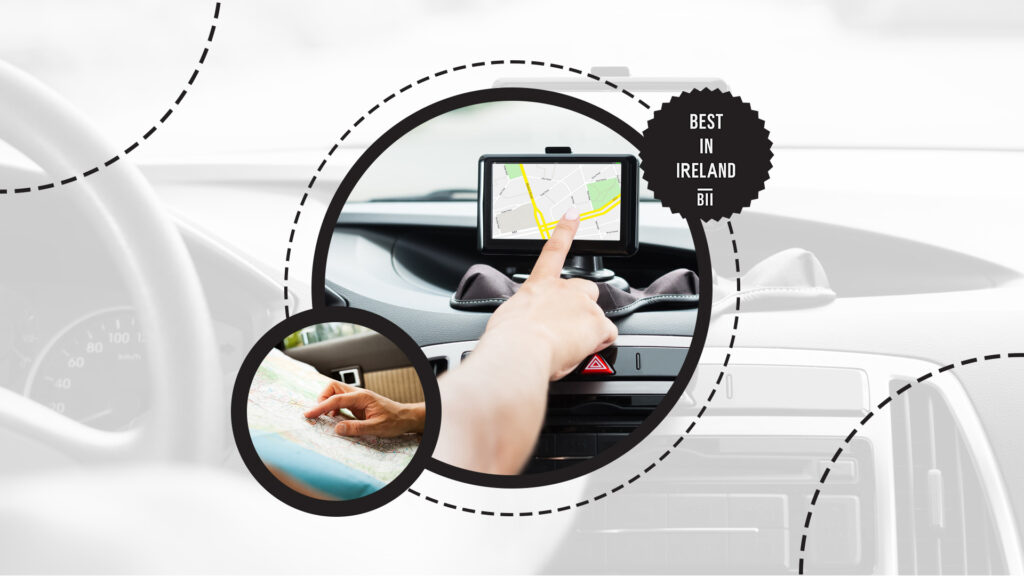
Navigating Ireland’s diverse landscape requires a multi-layered approach to technology and mapping. For international travelers, we highly recommend downloading offline maps before departure, as cellular coverage can be inconsistent in remote areas.
Physical maps remain surprisingly crucial in Ireland. The Ordnance Survey Ireland maps offer detailed topographical information, showing even the smallest country lanes and historical routes.
Rental car companies often provide complimentary road atlases, which can be invaluable when digital systems fail.
Another important tip is using your destination’s eircode (e.g. D02 N725) as navigation will be more accurate especially if it’s a specific place like a hotel or restaurant.
Practical Driving Tips
Parking Considerations in Towns and Cities
- Urban parking in Ireland involves metered street spaces, pay-and-display car parks, and limited free parking areas.
- Carry coins or use mobile payment apps.
- Be vigilant about parking restrictions, time limits, and local signage.
- In smaller towns, parking can be more flexible but always avoid blocking traffic or driveways.
Fuel Stations and Etiquette
Fuel stations are widely available along national roads and in towns, offering full service with both diesel and petrol. Take note that prices vary between urban and rural locations.
Most stations accept credit cards and double as convenience stores. Rural stations may offer slower, more personal service with friendly interactions.
Typical Road Challenges
Now that you’re familiar with the main road infrastructure in Ireland, here are some typical road challenges that motorists may often come across:
- Narrow lanes – Irish road lanes, especially in rural and historic town areas, are significantly narrower than international standards.
- Hedgerow-Lined Roads – Hedgerow-lined roads are a distinctive feature of Irish rural landscapes and can grow several meters high. These roads are bordered by dense, high vegetation walls created by generations of farmers.
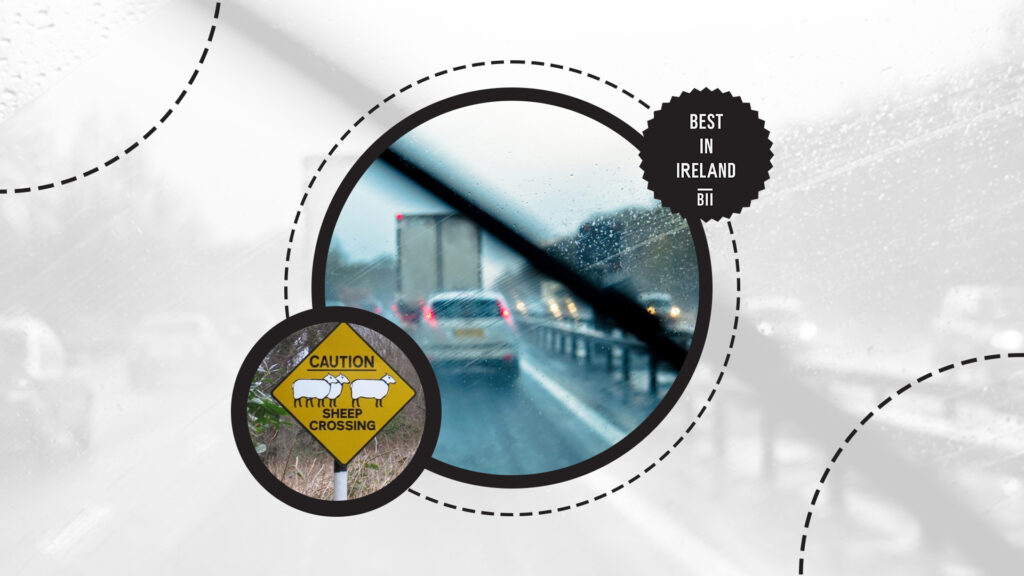
- Sheep and Livestock Crossings – Livestock, particularly sheep, are a common feature on rural Irish roads. Drivers must be constantly alert for unexpected animal crossings, especially in agricultural regions.
Road Safety Tips for Driving in Ireland
Weather-Related Driving Challenges
Irish weather can change rapidly, presenting significant driving challenges. Sudden rain, fog, and wind are common, especially in coastal and mountainous regions.
Drivers should maintain lower speeds, use headlights in poor visibility, and keep a safe distance from other vehicles. It’s also important to ensure windshield wipers are in excellent condition.
Night Driving Precautions
Rural Irish roads become particularly challenging after dark. Narrow lanes, limited street lighting, and potential wildlife crossings demand heightened awareness.
Use full headlights carefully to avoid blinding oncoming traffic. Drive slower than daytime speeds, watch for reflective road markings, and be extra cautious on winding country roads with limited visibility.
Wildlife and Road Hazards
Ireland’s rural landscapes are home to various road hazards, including sheep, cattle, deer, and foxes. Animals often wander onto roads, particularly at dawn and dusk.
Reduce speed in agricultural areas, watch for warning signs, and be prepared to stop suddenly. Livestock crossings are common, requiring patience and careful navigation.
Emergency Contact Information
In case of emergencies, dial 112 or 999 for police, ambulance, or fire services. Keep your rental car’s emergency contact number readily available.
It’s highly recommended to purchase international mobile coverage or a local SIM card to ensure reliable communication.
Cost Considerations
Fuel Prices
Fuel prices in Ireland fluctuate with global oil markets but tend to be higher than in many other countries, particularly in comparison with the US.
Prices vary between urban and rural areas, with motorway service stations often being more expensive. Meanwhile, urban areas like Dublin tend to have more competitive rates.
You can compare prices using local apps and fill up in towns for better rates. Expect to pay around €1.50 – €2 per liter.
Toll Roads
Ireland has several toll roads, primarily around Dublin and connecting major cities. The M50 Dublin orbital motorway uses an electronic toll system called eFlow, which requires prepayment or payment within a specific time frame after travel.
Most rental cars include toll payment services, but it’s best to confirm this in advance. Typical toll costs range from €1.50 to €3.50 per journey.
Parking Fees
Parking costs vary significantly between cities and towns. Urban centers like Dublin, Cork, and Galway have metered street parking and multi-story car parks.
Rates range from €2 – €4 per hour in city centers, while some towns offer free parking with time limits. Remember to always carry coins or use mobile payment apps for parking meters.
Cultural Driving Etiquette
Local Driving Customs
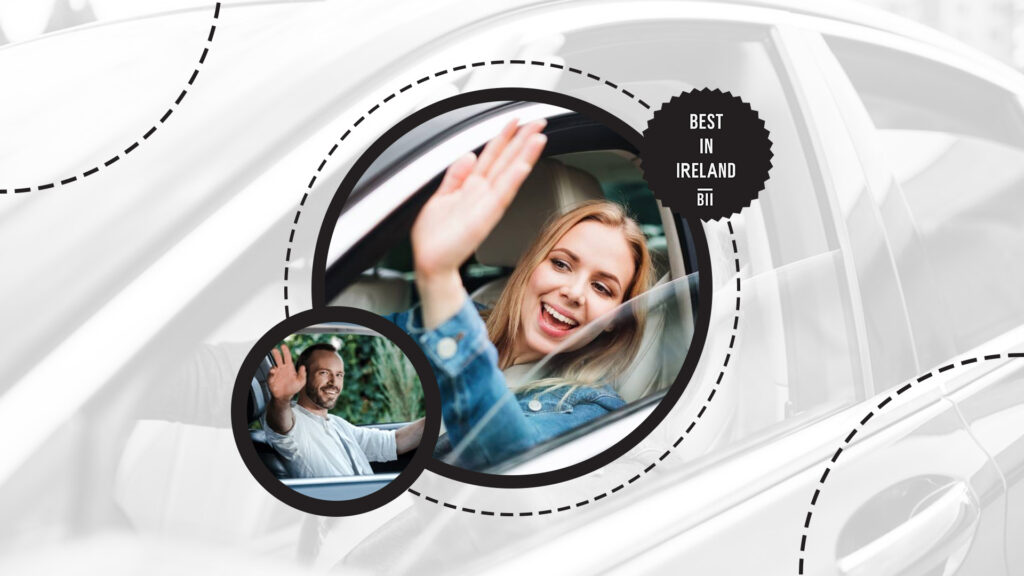
Irish driving culture emphasizes politeness and community-oriented behavior on the road. Drivers often give a small wave or flash their hazard lights to thank other drivers for yielding or allowing passage.
There’s an unwritten expectation of patience, particularly on narrow rural roads where negotiating space requires mutual cooperation.
It’s also good to know that locals are generally understanding of tourists but appreciate drivers who demonstrate awareness and respect for local road-sharing practices.
Rural vs. Urban Driving Differences
Urban and rural driving in Ireland present different experiences. City driving involves navigating narrow streets, one-way systems, and dense traffic, as well as awareness of pedestrians and cyclists.
Meanwhile, rural driving demands patience, slower speeds, and heightened awareness of unexpected obstacles like farm animals, tractors, and narrow lanes.
Lastly, urban drivers tend to be more direct, while rural drivers embrace a more leisurely, cautious approach to navigation.